

Endodontic Therapy
Oakville Root Canal
Treatment
Alleviating Pain and Saving an Infected Tooth
Experience relief from the pain of an infected tooth. If you have severe tooth pain, you may need a root canal treatment. At South Oak Dental, we offer these treatments to help our patients. You can count on us for friendly service, and know that we’ll take time to put you at ease and discuss your situation thoroughly with you.
A root canal procedure relieves the pain associated with dental pulp infection, as well as the health complications of a missing tooth.
What Is Root Canal Therapy (Endodontic Therapy)?
It is an endodontic treatment, meaning the inside of the tooth is treated, and focuses on treating the dental pulp, or the soft tissues in the inner part of the tooth root. The pulp contains nerves, blood vessels, and connective tissue, and when it becomes infected or damaged, it can lead to severe pain and potentially the loss of the tooth. Root canal therapy aims to save your natural tooth by removing the infected or damaged pulp and sealing the tooth to prevent further infection.
Signs You Might Need a Root Canal Treatment
Some common symptoms that you may need a root canal treatment include:
- Severe or throbbing pain in the tooth, especially when chewing or applying pressure
- Heightened sensitivity to hot or cold temperatures
- Swelling and tenderness in the gums near the affected tooth
- Tooth discolouration or darkening, which may indicate pulp damage
- Abscesses, which are pimple-like bumps on the gums, often accompanied by pus
- Severe pain causing you to wake up in the middle of the night
How Do the Tissues in the Pulp Chamber Become Infected?
Infection can reach the pulp if a tooth is heavily decayed or damaged by a crack or a chip. A trauma to the tooth may damage pulp even if there is no visible damage. Repeated dental procedures or an improperly fitted dental crown that allows bacteria inside it can increase the risks of an infected tooth.
The Root Canal Treatment Process
Examination and Diagnosis
When you visit South Oak Dental for root canal treatment, Dr. Sidiura will start by conducting a thorough examination of your affected tooth. X-rays and other imaging and diagnostics will be done to assess the extent of the damage and the condition of your pulp.
Anesthesia and Sedation
A local anesthetic is used to minimize any discomfort and make the experience more positive. At this time, we can also offer sedation, if you are a good candidate for it.
Removal of Infected Pulp from Root Canals
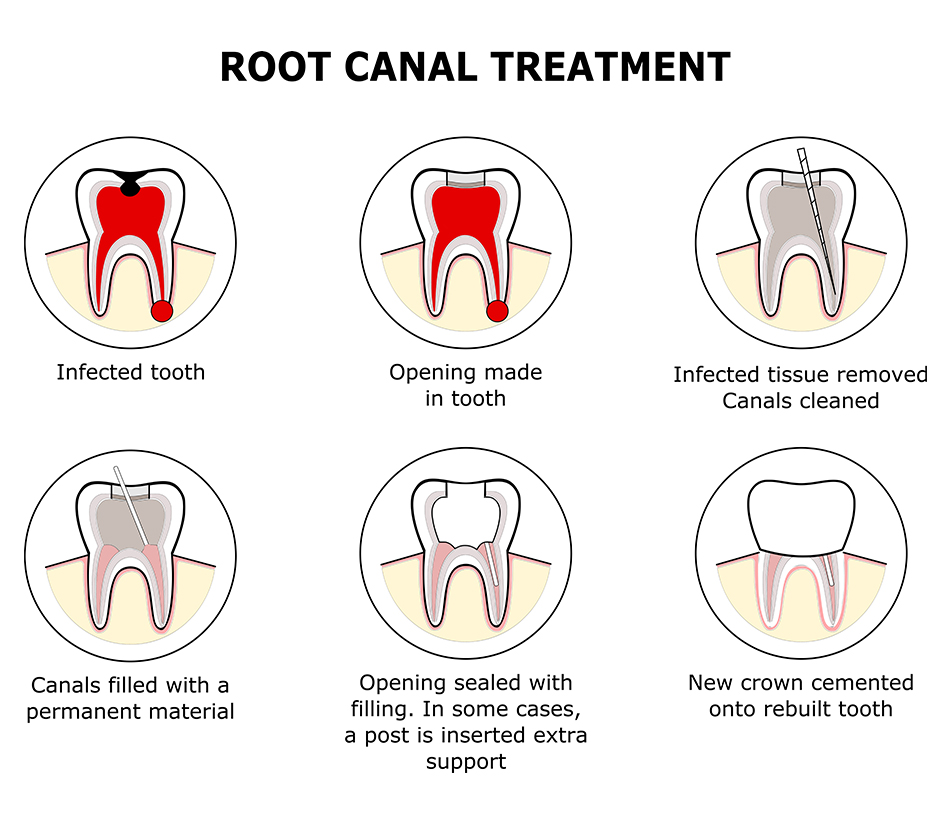
Once you are comfortable, our dentist makes a small opening in the tooth to access the infected pulp. The damaged pulp will be carefully removed, and the root canal space will be cleaned and disinfected.
Filling the Pulp Chamber and Sealing the Tooth
After the infected pulp is removed, the tooth’s interior will be filled with a special material called gutta percha to seal it and prevent further infection. The access opening will also be sealed with a filling.
Placing a Dental Crown
Usually, a crown is placed on the tooth after a root canal treatment to restore its strength. We will discuss your options for the crown material and work with you to find the best option for you.
Post-Treatment Care
After your root canal therapy, it’s essential to maintain good oral hygiene practices and care for the area properly. We will provide you with instructions on how to care for your mouth after treatment.
Follow-Up
Follow-up appointments may be necessary, and ongoing regular checkups are important to ensure the ongoing health of the tooth and surrounding bone and gums.
Why You Shouldn’t Delay Receiving a Root Canal Treatment

Root canal treatments can save natural teeth. Keeping a natural tooth is almost always preferred, when possible, as it is usually better for maintaining oral health. The only alternative to a root canal treatment is a tooth extraction.

Finally, a root canal is a more cost-effective alternative to having a tooth extracted and needing to find a tooth replacement option.
Contact Us Today
At South Oak Dental, we prioritize your comfort and well-being. We go the extra mile to make your experience as comfortable as possible, and tailor our approach to your specific needs. We strive to make you comfortable while providing the best care possible.
If you suspect you may need root canal therapy, or have any questions about the procedure, feel free to call us. Our team is here to assist you with your oral health.
Schedule an appointment today!